When integration goes wrong, everything can quickly fall apart
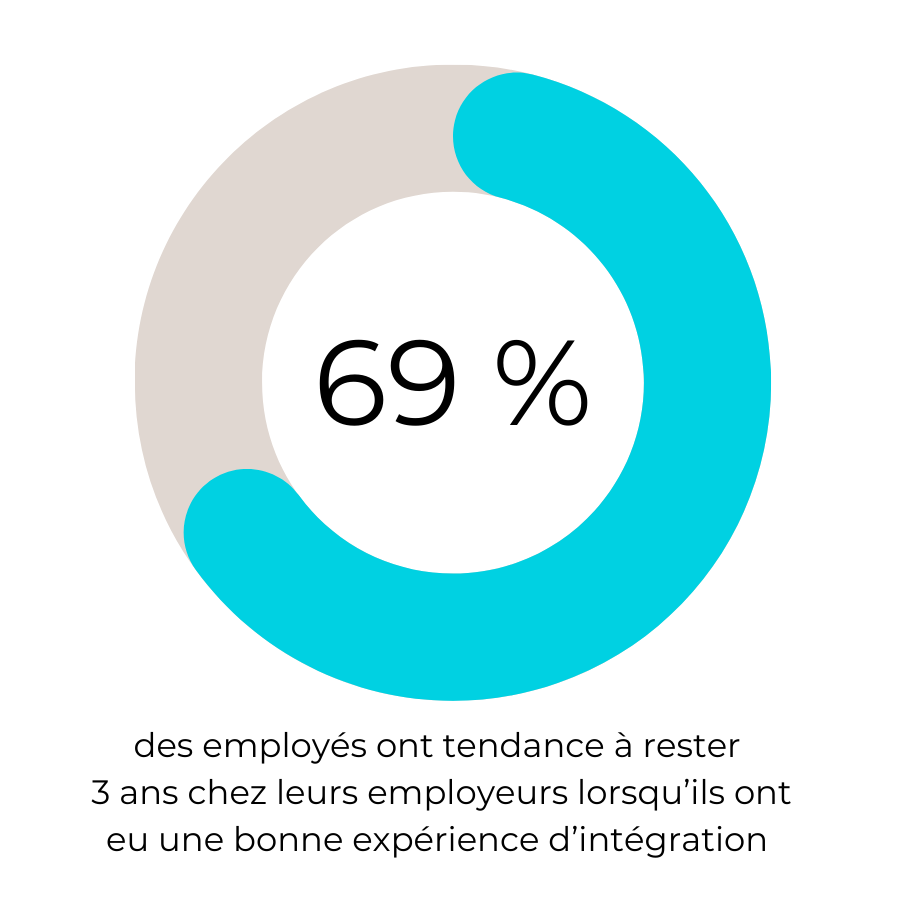
When integration fails, it is rarely because the person does not know how to do their job. The problem is more likely to be a lack of support around them. We do not realize enough that the first three months often determine whether the person will commit... or give up.
It's not the workload that discourages them, nor the complexity of the job: it's the feeling of walking alone in a new reality, without guidance, without reference points, and without any real conversation about how to succeed.
 |
 |
Integration is not just about welcoming someone: it's about organizing their learning
Most organizations have sincere intentions: to welcome new employees properly, provide them with the tools they need, and introduce them to their colleagues. But today, integration is no longer just about welcoming someone.
It is based on a more demanding but also more realistic idea: integrating someone means organizing their learning. It means accepting that starting a new job is a living process that requires not only time, but also a thoughtful choice of means to support this progression.
This is where managers often find themselves at a loss. They have three main avenues for this learning process:
- Training,
- Mentoring,
- Coaching.
These are three well-known tools, but it is not always clear how to use them to support integration without rushing things or leaving the person to fend for themselves. However, each approach meets a specific need and produces very different results.
Training, mentoring, coaching: three tools, three distinct effects
Training provides structure, reassurance, and a common language.
It works particularly well when new hires need to master specific knowledge, skills, or attitudes. But it reaches its limits when it comes to navigating the nuances of an organization's culture, understanding what documents don't explain, or learning to exercise professional judgment in gray areas.
Mentors don't teach what to do, but how to think.
They know the terrain, the invisible contours of roles, cultural codes, and dynamics that aren't written down anywhere. For experienced recruits, or for those who have already mastered the technical aspects of the job, mentoring becomes a space for accelerated integration: it transforms observation into understanding, and understanding into reflexes.
Coaching to gain perspective
It does not provide expertise, but rather the ability to gain perspective from the very first weeks, when relationship and decision-making issues are already beginning to arise. Coaching is often thought of as being reserved for major transitions, but it becomes a powerful lever when a new hire occupies a position of influence, when they need to quickly establish their credibility, or when they inherit a team that already has its own history. Coaching then helps to clarify their position, refine their choices, and avoid missteps that can weigh heavily in the first few months.
How to choose the right tool based on your recruit's profile
Before deciding which tool to use, it's important to understand who you're working with. You don't onboard a beginner the same way you onboard an expert, and a manager never goes through their first few weeks the same way a technical employee does.
Correctly identifying your recruit's profile allows you to ask the right questions from the outset and then adjust the onboarding process step by step.
Here is a grid to help you determine your recruit's profile:
| Profile | Beginner | Intermediate | Expert | Manager |
| Typical signals upon arrival | Looks for reference points, asks technical questions, moves forward cautiously. | Performs tasks but hesitates about internal procedures. | Quickly masters the technical aspects but encounters invisible barriers (culture, networks). | Observed, sought after, expected to take a stance, must quickly inspire confidence. |
| Questions to ask for validation |
– Have you ever held a similar role? – What seems new or unsettling to you? |
– What differences do you see compared to your past experiences? – In what situations do you feel you are in a gray area? |
– What would you need to be fully effective here? – Where do you feel you are wasting time? |
– What are your expectations for your first few weeks in leadership? – What team issues have you already identified? |
| What this means for the rest of the journey | Follow-up should devote more time to training and clarifying processes. | Follow-up will focus primarily on understanding cultural codes and internal dynamics. | Follow-up should focus support on internal culture and networks. | Follow-up should include early coaching to establish the right approach and avoid relational missteps. |
Once the recruit's profile has been clarified, you need to monitor their progress and adjust your support at the right time. The first few weeks provide valuable insights: what the person understands, what unsettles them, what they don't yet dare to mention.
By structuring the onboarding follow-ups around a few key questions, it becomes much easier to choose the most useful tool based on what the new hire is actually experiencing.
In practice, truly effective follow-up is organized around a few key steps.
The first week: the new hire is finding their bearings. They are trying to understand where to find information, how tasks are structured, and what remains unclear. This is the time to consolidate the framework, as the technical uncertainty of the early days can become unnecessary stress.
Around the third week: nuances begin to emerge. The person has mastered the tasks, but is coming up against informal codes, relationship dynamics, and implicit expectations. This is the ideal time to introduce more mentoring or a space for light reflection.
At the end of the first month: the new hire is no longer just “doing.” They are wondering how to “be in the role.” They question their posture, their judgment, their decisions. This is when coaching comes into its own.
Around months 2 and 3: consolidation begins. The new hire wants to improve their impact, develop their relationships, and refine their strengths. Support becomes more strategic.
To help you structure your follow-ups at each stage, the questions to ask, the signals to interpret, and the most relevant support tool, here is a practical resource.
Download the complete checklist: The 4 key steps to supporting a new hire without losing them along the way (in French only)
A clear, actionable guide designed to help you know exactly what to look for... and what to do at the right time.
Training, mentoring, coaching: it's not quantity that counts, but clarity
Training, mentoring, coaching: none of these tools is magical in itself. What matters is how they work together to offer a meaningful career path. A path where you don't just “drop” a new hire into a role, but where you support them so they can thrive, understand their impact, and see themselves in the role for the long term.
If you want to ensure successful onboarding and start building loyalty, our training course
➡️ Employee experience: successful integration to increase retention
will help you show from day one that your organization takes the success of its talent seriously.
Sources :
Glassdoor - The Hidden Costs of Onboarding a New Employee
PeopleKeep - Employee retention: The real cost of losing an employee
wynhurst Group - Employee Onboarding – You Only Have 1 Chance to Make a First Impression
SHRM - Don't Underestimate the Importance of Good Onboarding