


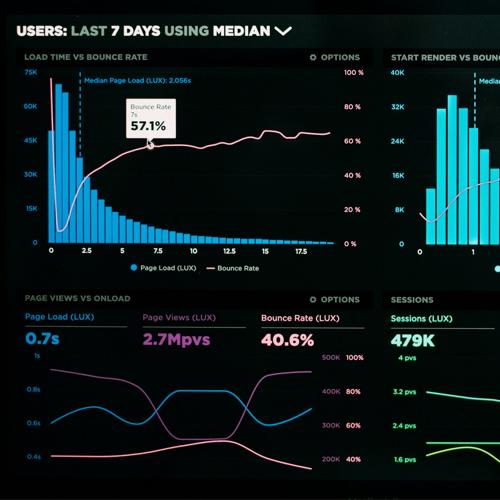
Have KPIs in place so you're not caught off guard
The first line of defense is performance indicators, which can be divided into two categories:
KPIs that allow you to anticipate results.
- Number of leads generated
- Engagement rate (clicks, opens, customer interactions)
- Number of appointments or proposals sent
- Completion rate of planned sales actions
- Prospecting intensity (calls, emails, visits)
KPIs that measure results achieved:
- Revenue generated
- Conversion rate of prospects to customers
- Average sales basket
- Compliance with budgets and target margins
- Customer satisfaction or retention rate
These indicators should not be seen as constraints. Used correctly, they are tools for collective management. They become even more valuable if the team is involved in defining them and takes ownership of them.
Create a useful and frequently used dashboard
A well-designed dashboard allows for quick reading and team alignment. It should combine these indicators in a concise interface that is updated regularly.
| Indicator | Objective | Frequency of monitoring |
| Number of leads generated | Ensure a constant flow | Weekly |
| Conversion rate | Measure sales effectiveness | Weekly/monthly |
| Revenue generated | Track actual performance | Weekly/monthly |
| Number of appointments scheduled | Check activity volume | Weekly |
| Average basket size | Optimize sales value | Monthly |
| Customer satisfaction/NPS | Build loyalty and adjust approach | Monthly/quarterly |

This table is only useful if it is shared, understood, and used in the team's daily work.
For it to really work:
✔️ Data updated automatically (and centralized: CRM, ERP, Excel, etc.)
✔️ Simple visualization with color coding (green = OK, orange = Caution, red = Deviations)
✔️ Accessible everywhere (computer, cell phone)
✔️ Reviewed collectively during periodic rituals
✔️ Limited to the essentials so as not to overwhelm priorities
A good table does not replace dialogue, it facilitates it.
What if results still slip?
Even with rigorous management, some months will be difficult. This is where the role of the director or sales representative supervisor comes into its own. Here are the steps to follow.
Analyze the situation
- Where is the problem in the sales cycle?
- Is it due to activity (number of calls) or the quality of the process (conversion rate)?
- What do the qualitative indicators show (team fatigue, no-show rate, weak customer feedback)?
Reassess the objectives
- Break down the main objectives into smaller, more realistic sub-objectives.
- Communicate them to the team to give them visibility and boost commitment and motivation.
- Adjust forecasts to market realities.
Adjust the sales strategy
- Adapt prospecting (update sales pitches, qualify prospects, etc.).
- Requalify targets: are we chasing the right prospects?
- Improve internal processes (support for reps), redistribute resources as needed (some may be underperforming for good reasons).
Strengthen follow-ups
- Increase the frequency of performance reviews for “hot accounts.”
- Set alerts for critical KPIs to anticipate dropouts as much as possible.
(Re)Motivate
- Offer support (mentoring, coaching, training, etc.)—targeted skills development can make all the difference.
- Celebrate victories, even small ones.
Cultivating an agile mindset allows you to test, learn, and adjust.

Identifying causes: the 5 Whys technique
When the diagnosis is unclear, or when several factors seem to be involved, the “5 Whys” tool[1] can be used to trace the causes, not just the symptoms.
Example:
- Why is the sales target 20% lower? (e.g., because the number of leads is insufficient)
- Why is the number of leads insufficient? (e.g., because prospecting is weak)
- Why is prospecting weak? (e.g., because the sales team lacks training)
- Why does the team lack training? (e.g., because the training plan is not up to date)
- Why is the training plan not up to date? (e.g., no designated manager)
Each “why” calls for corrective action, a designated manager, and a review date. Simple and effective.

|
Spot weak signals before they turn red Some signs to watch out for in the daily hustle and bustle:
Questions to ask yourself:
|
Conclusion
Meeting sales targets is rarely plain sailing. It's not the fact that high-performing teams experience setbacks that sets them apart, but their ability to identify them early on and adjust quickly (and lucidly).
A good sales manager doesn't just read numbers: they transform them into a group dynamic where everyone knows where they're going, why it's important, and how to contribute to the result.
To go further: ➡️ Sales: turning every exchange into an opportunity


